
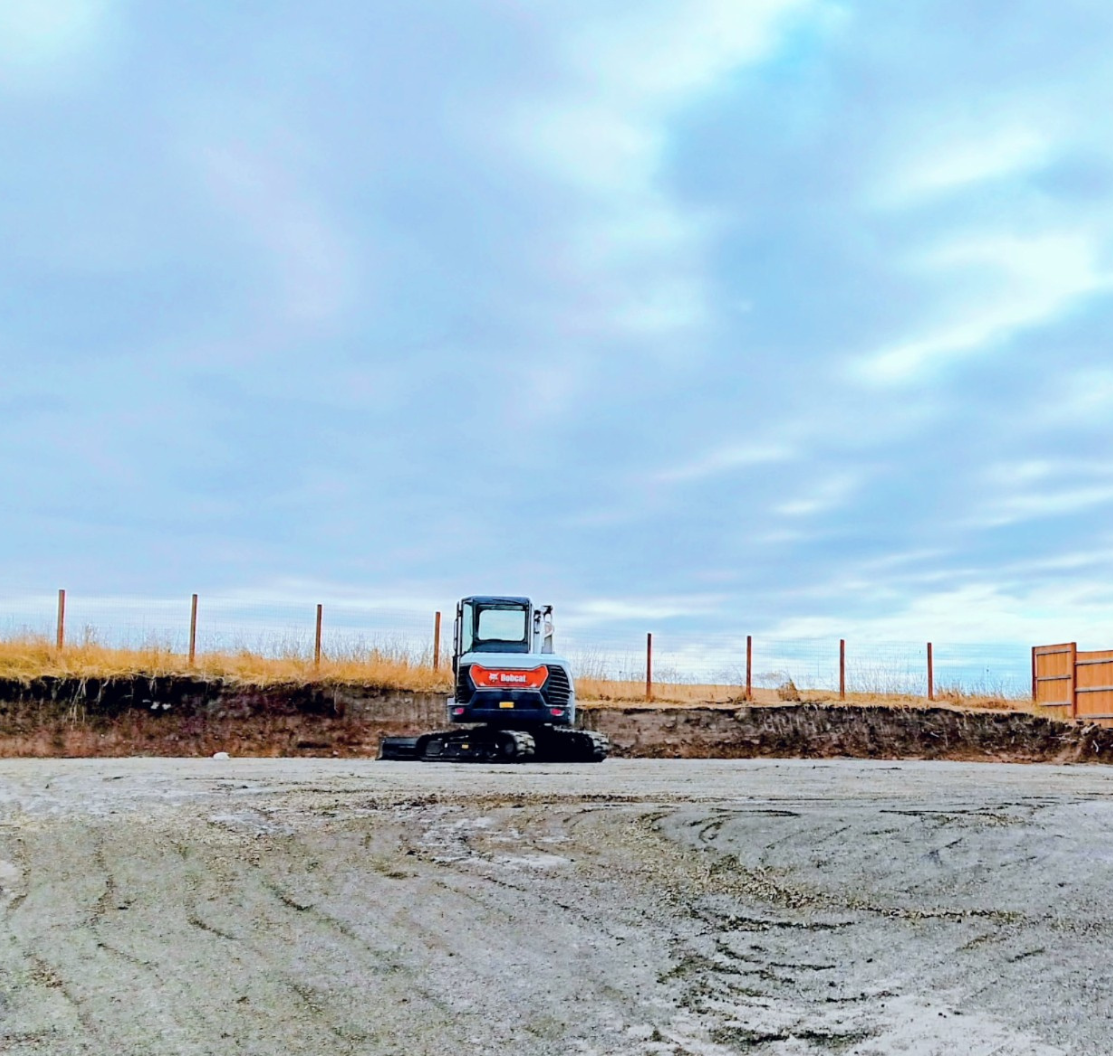
Create Stable Ground Before You Build
Grading services in Davenport for properties with uneven terrain that need controlled drainage and level building pads
TILT Excavation and Land Clearing offers grading services across Davenport, Medical Lake, Harrington and surrounding rural properties, shaping land to create stable, usable surfaces that support construction and prevent water from collecting where it shouldn't. If you're preparing a site for a new home, expanding a driveway, or correcting drainage problems around an existing building, grading adjusts the contours and elevations that determine how water moves and where structures can safely sit. You're working with a team that understands how small changes in slope affect long-term performance.
Grading involves cutting high spots, filling low areas, and contouring the land so runoff flows away from buildings and toward ditches, swales, or culverts. The process accounts for soil composition, existing drainage paths, and the final use of the space. In the Davenport area, where properties often feature natural slopes and seasonal water flow, proper grading prevents erosion, reduces standing water, and creates a foundation that won't settle unevenly under load. The work is calibrated to match the grade requirements of driveways, building pads, and access roads.
Reach out to discuss grading services and get an assessment of what your property needs to achieve stable, well-drained surfaces.
How Grading Changes Your Property's Function
You'll see equipment that adjusts blade angles to match engineered grades or visual benchmarks set during site review. The crew removes or redistributes soil to achieve the specified slope to ensure water doesn't pond or seep toward foundations. Material is compacted in layers to avoid future settling.
After grading is finished, you'll notice level pads where buildings will sit, smooth transitions along driveways, and defined drainage channels that direct runoff away from high-traffic or high-value areas. TILT Excavation and Land Clearing coordinates grading with other site work so the finish grade is compatible with foundation forms, utility trenches, and surface treatments like gravel or concrete.
The process includes checking elevations at multiple points, adjusting for natural drainage features, and ensuring compacted fill meets the density required for the intended use. Grading includes topsoil placement, seed, and erosion blankets, and the crew can prepare subgrade surfaces for those finishing steps. If your property has significant elevation changes or drainage issues that affect adjacent parcels, the grading plan may need to account for culverts, berms, or retention areas.
Here are answers to questions property owners in Davenport and neighboring communities often ask when planning grading work for drainage control and site preparation.
Common Questions About Land Grading
How does grading prevent driveway washout?
Grading creates a crowned or sloped surface that sheds water to the sides before it can channel down the center and erode the base material underneath.
When should grading be done relative to excavation?
Grading typically follows rough excavation and precedes final base installation so the surface is contoured correctly before gravel, asphalt, or concrete goes down.
Why does fill dirt need to be compacted during grading?
Uncompacted fill settles over time, which causes low spots, cracks in pavement, and uneven building pads that can compromise structural integrity.
How is grading adjusted for seasonal water flow?
In Davenport, grading plans account for snowmelt and spring runoff by directing water toward drainage features that can handle peak flow without flooding adjacent areas or eroding slopes.
If you need grading to correct drainage problems or prepare land for construction, contact TILT Excavation and Land Clearing to schedule a site visit and review the specific conditions affecting your property in Davenport.